
The Graden, 1999, temporary
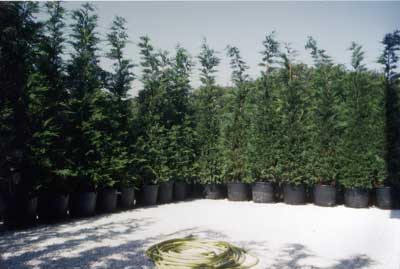
chips of Carrara marble, 30 cypresses (Cupressocyparis)
plastic pots, garden hose, chain
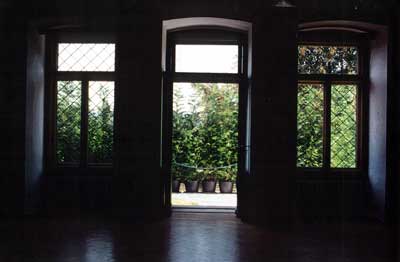
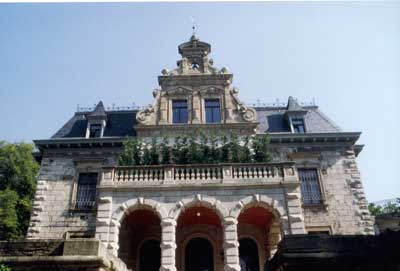
Luc Wolff laid out a garden on the balcony of the Villa Haar. Thirty cypresses (Cupressocyparis), each nearly 2.5 metres tall, line the stone balustrade on the imposing porch supported by massive columns on the south front of the stately building. The trees enclose the balcony, with its 40 square metres of space, like a hedge. Viewed from the park, the strictly ordered, regular row of treetops appears to be a botanical extension of the Italian neo-Renaissance architecture. Approaching the garden from inside the villa, the visitor climbs a broad, dark wooden staircase which opens into the empty central hall. Two tall windows and half-opened French doors in the immaculate, white outermost wall of the brightly lit room direct the gaze toward the balcony, which is accessible only to the eyes, however, as a chain across the doorway prevents visitors from exiting the room.
Fine, snow-white chips of Carrara marble cover the open floor space. The air is filled with the tangy scent of the cypresses. The evergreens in black plastic pots stand in a tightly packed arrangement, transforming the balcony into an enclosed courtyard. A rolled-up yellow garden hose lying in a corner signals the trees‘ need for continuous, painstaking care during the sunny summer months. Luc Wolff negates the original function of the balcony and its view over the extensive park grounds in an ironic way.
By blocking the view, he calls attention to the transitional character of the balcony space as an opening of the building interior into free outdoor space. The balcony is enclosed along its perimeter and thus can be experienced as a space in its own right. The clear, quiet aura of the pure, white floor and the vertical rise of the cypresses awakens associations with sacred sanctuaries in Mediterranean cemeteries and monastery gardens.
Thomas von Taschitzki