
All about Eden, 1998, tempoary
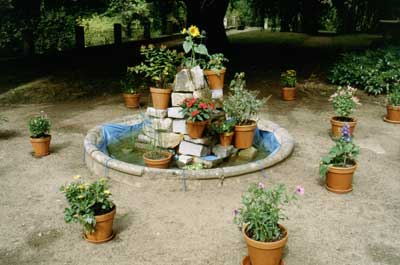
diverse plants, stones, plastic sheeting, water, pump
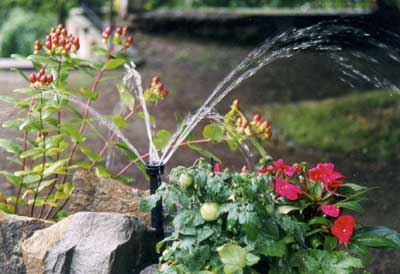
An old, disused fountain was brought back to life as a point of contrast to the melancholy appearance of the Villa Haar. The cheerful, carefree ensemble of light-blue plastic sheeting, flower pots containing colourful, blooming, fruit-bearing plants and the splashing water of the rejuvenated fountain communicate a sense of vitality. Insects are lured by the plants and alight on them. The fountain and the plants create a small paradise. Bees and bumblebees perch inside the blossoms; flies cover the rotting fruit. Having observed the scene for a period of time, one realises that the insects, in turn, are food for the birds. This harmless-looking picture also represents a food chain and conflicts with the conventional view of paradise. This is "All about Eden", the whole! story of Paradise.
Barbara Nemitz
The fountain
A fountain is growing in Weimar, a living monument to the intricate
heritage of the place. It is a fountain of plants, water spilling down
through the leaves, irrigating memories. In daylight couples stroll hand
in hand, students sketch and children splash, deaf to the grown-up’s
admonitions. Birds bathe, preen and flit away. In moonlight, creatures
gather at a basin pool to drink.
Night here is active but furtive, like
the shadow years the town has witnessed.
Gropius and Goethe sleep the same dream of cultivation. The fountain
grants a Bauhaus wish and marries art to engineering. It sees through the
eyes of the poet, also a celebrated scientist, who conceived a theory on
metamorphosis in plants while court to Archduke Carl-August for
whom he also designed the park along the river Ilm. Like Goethe’s park
the living fountain wants to free the soul.
Andrea Scott